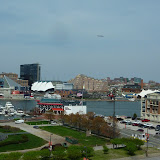
Friday, April 30, 2010

Beatrice and Virgil - Yann Martel

I am one of those people who was really on the fence about Life of Pi (I loved the book right up until, but not including, the last chapter). I probably would have read Beatrice and Virgil eventually, but then my sister sent it to me for my birthday earlier this month, and it was bumped up to the top of my reading list.

I think that I liked this book. I found it quite engaging - as I read it over the course of this week, mainly in 30-60 minute chunks at bedtime, it was easy enough to pick up and put down with no problem remembering the story from night to night; but not so gripping that it kept me awake at night. That is, until last night when I was finishing the book.

I'm not going to reveal the plot, but I will say that there is a plot twist right close to the end that was as visceral as a punch in the stomach. In retrospect (hindsight being 20/20 and all), I should have seen it coming, but I didn't, and it kept me awake after finishing the book, reflecting on what had just happened.

Parts of it were a bit clunky - there are obvious parallels between the main character and the author; it was a bit slow to get going and to figure out where the story was going - but it was almost like a runaway train picking up momentum before crashing at the end of the line.

A lot of the promotion has been about the concept of a "flip-book". The main character is an author who can't get his latest book published because it is a flip-book with a novel beginning at one end and an essay at the other that meet in the middle; and apparently Yann Martel wanted to publish this as a flip book along with an essay on the holocaust. But then someone sensibly pointed out that including an essay would necessarily colour any reader's interpretation of the book. Though a lot has been made of this, I think that the whole thing was less relevant than the actual plot.

So as I said at the beginning, I think that I liked this book, but I'm going to need to take some time to digest what just happened. It is certainly a book that is going to stay with me for a while.

Effective Marketing

At BookEnds, we’ve been working on updating the publicity guidelines we hand out to all of our clients. We try to give them ideas of where we feel their time and money are best spent and will hopefully result in actual book sales.

We love to give them specific examples of unique/effective marketing tools. Obviously, we’ve heard great stories from our authors over the years, but we also thought it would be great to hear directly from book buyers.

So tell us! What clever publicity tricks have led you to buy an author’s book? Was it a mention in a magazine article? A book signing? A giveaway at a conference? A blog interview? A book trailer? An author’s speaking engagement? What examples of clever, effective marketing have you seen from the authors you love?

Kim

How I bang my head against my fist and a book comes out


When my CP Tawna Fenske asked if I wanted to blog about my writing “process,” I first thought, People really want to know how I bang my head against my fist?

Then it occurred to me that what she actually meant is my map for how to go from the blank page with that taunting cursor to The End.

How I do it is probably not like anybody else does it. Tawna’s way is different. Nelsa Roberto, my CP as well, has another way. Several phenomenally talented authors agreed to share theirs. When you’re done with me, be sure to visit Tawna and Nelsa, along with Sean Ferrell, Linda Grimes, and Kiersten White to learn what works for them.

I am a control freak. I plot everything. That’s not saying the final MS turns out anything like what I originally plotted. That’s just saying I can’t go to the grocery store without plugging it into my GPS. I gotta know where I’m headed.

The Idea Stage: (Nano-second) I hear a song, an anecdote, a news item or experience some random act of life and think, Hmmm, what if …? Since I’m usually knee-deep in another story, I promptly go to my Word document of story ideas and write it down.

The Rolling It Around In My Head Stage: (anywhere from days to years) I figure out a few things, like characters and conflict.

The Movie Synopsis Stage: (An hour max) I write down a short synopsis of what happens. I write it like I’m telling a friend about a movie. Yes, I’m a freak who writes a synop before I write the MS.

The Mall-Map-of-Life Synopsis Stage: (An hour max and proof that I really am a freak) I write another synop, concentrating on the character arc. My heroine starts out HERE (maybe without a backbone), and she ends up OVER YONDER (backbone firmly in place.) I pull out specific plot points to illustrate her growth.

The Write-the-1st-3-Chapters: (a week to a month) This is where I really let the characters breathe and realize, Hey, my heroine has a dog.

The Plot-it-Within-an-Inch-of-its-Life Stage: (an afternoon) I calculate total pages, divide them into chapters, and plot out each chapter in a sentence. And now I can write!

Yes. I am a mutant.

On a good day, I can churn out a chapter a day, which is about 12 pages. I send that to any willing CP who’s not neck deep in a deadline, and I start a new chapter.

Tawna will say, “OK, this is good, but what does your hero look like? Is he hawt? Cuz this is supposed to be, yanno, a romance.”

I remind her that I’m trying to write an inspirational romance, which only marginally shuts her up.

Nelsa will say, “OK, this is good, but what’s your character’s motivation? What makes her want to grow a backbone?” Nelsa is probably the inventor of the old saw about how many shrinks it takes to change a light bulb.*

I go back and rethink my hero's looks and my heroine's motivation, and send my CPs my next chapter.

I revise at the end, unless they tell me I’ve really gone off the rails. The chapter-by-chapter critique helps me stay focused and know when something’s not working. That’s when I scrap the whole thing and say, “Hello, Square One.”

While it’s heavy on plotting, it works for me. I’ve tried pantsering, and I just get lost. And it’s not pretty when I’m lost. Just ask The Husband.

But my way is not the only way. My way may drive you up the wall. Tell me how you do it, and then visit these fine folks!

Tawna Fenske (romantic comedy)
Sean Ferrell (literary fiction)
Linda Grimes (light paranormal mystery)
Nelsa Roberto (young adult)
Kiersten White (young adult)

*The answer to the joke: it depends. Does the light bulb want to change?

Thursday, April 29, 2010

Author-Agent Agreements

What if a writer on her own gets offered a contract from a small or university press with little or no advance? And what if that writer wants to protect her rights by having an agent look over the contract? Would an agent then agree to taking a small fee from the writer (if the writer wasn't offered an advance)? Would an agent then also agree to represent that writer with any foreign/film/subsidiary rights?

Since there are no real “rules” when it comes to author representation, anything is possible. If you find yourself in this situation and would like an agent to represent you, I don’t think it would hurt to ask the agents you’re interested in, those who are presumably interested in your book along with the small press, if they would take a deal like this. That being said, I think you’re really selling yourself short, and your career short, by doing something like this.

This is one of those questions that reminds me how narrowly many authors see any agent’s job. When querying and submitting to agents it’s easy to focus on the next step (finding an agent so you can submit to publishers) and to forget the bigger picture. If you get an offer from a smaller press you have the opportunity to find an agent who can use that offer for bigger things. Why would you find an agent and pay a flat fee to negotiate a contract when you could offer a standard commission deal and have the agent submit that book to the major New York publishers, possibly turning that small press deal into a big press, bigger deal? Sure, it’s possible the agent won’t sell it to a bigger house, but remember, submitting your book is networking. Maybe an editor she sends it to will love your writing, and while she doesn’t feel she can offer on that book you’ve made a connection, she’s now watching your career, and, since you already have an agent, you’re ready to go with your next project, which you and your agent will already be working toward.

Getting an agent should be about a lot more than submitting your book or negotiating a contract. It should be one step toward building a career, and hopefully that’s the way you’ll want to treat it. Wouldn’t you rather sign an agent on commission to build a career than treat her like a one-book trick? By paying her a fee rather than commission you aren’t asking an agent to sign on for your career, you're simply asking her to do one task. I also think that by giving the agent an interest in your book and future sales you make her more invested in you as the author.

And last, if you’re trying to get off cheap and you’re getting little to no advance, you could actually pay the agent less by paying commission than you would by paying a “small fee.”

Jessica

I'm shocked, I tell ya!


Shocked at how many good things have happened this week!

1) My new proposal has been with my editor for, lemme see, just over 41 hours (but who's counting?) and she hasn't e-mailed me back with, "You're kidding, right? Send me the real proposal."

2) The Kiddo won Third Place in a regional writing competition (we're talking 40 schools, folks) for an essay about a hero in her life.

3) Turns out, that hero? It's me! (The Husband is pouting about this.)

4) Tomorrow, thanks to my CP Tawna Fenske, we will have an impromptu blog chain about how we write -- and I'm joined by some phenomenally talented writers: Tawna, Sean Ferrell (who is repped by THE Janet Reid and has a book, NUMB, coming out this fall. Go. Preorder. NOW.), Linda Grimes (who is repped by THE Michelle Wolfson), Nelsa Roberto (whose book ILLEGALLY BLONDE is out now. Go. Order. NOW.), and Kiersten White (whose book PARANORMALCY may just make us all say, Stephanie who?? Go. Preorder. NOW.)

We'll all be taking turns on our own blogs, telling you how we do what we do. So stay tuned!

Wednesday, April 28, 2010

The Internet and Your Career

I spent this week thinking a lot about blogging, Tweeting, and the Internet. I read this Huffington Post article by Jason Pinter and remembered when he was fired and the rumors and speculation that followed. I also thought of the backlash that all bloggers and Tweeters have received at one point or another and, most important, I thought about the careful line we all tread to be interesting and insightful and still keep our jobs.

Jason is certainly right when he talks about how much social networking has changed in just three short years. Three years ago I had just entered the world of blogging and was very careful about what I said and did. Other agents were critical of the few of us who blogged and hardly anyone was on Facebook. Now, though, it seems more and more agents blog and almost everyone Tweets. And Facebook. Well, I have 730 “friends,” few of whom I actually know personally. While I agree that publishing is embracing social networking and it’s a good thing, I’m not always sure that everyone is embracing it in a way that’s helping them.

As many of you know, I’m a very occasional Tweeter (you can find me at @BookEndsJessica), a regular blogger, and I have a public Facebook page (Jessica Faust BookEnds). With each post, Tweet, or status update I make I think carefully about my audience and how I want to be perceived. I also have a private Facebook page where I let it all hang out (without the photos) and am very careful about allowing only friends and family in as “friends.” The truth is while I don’t have a boss in the context of someone else sitting in my office whom I answer to, I still have a number of bosses in the form of my clients. I also have to answer to editors and other publishing professionals and want them to only see “work Jessica.” Not all the other Jessicas that my poor family has to see.

We’ve talked a great deal about building your brand as a published author and what you want others to see and know about you and what you probably should or shouldn’t post on these pages. What we haven’t often talked about is who you allow in as your friends. The other day I logged into Jessica Faust BookEnds to see a very political status on one of my “friend’s” pages. It was the kind of status that was sure to provoke some heavy debate and the kind of status that contained information I probably don’t want to know about clients or potential clients. I think a lot of unpublished writers out there forget that seeking publication is a job search, and like any job search you probably want to be careful about what potential future employers (I’m thinking publishers here) know about you. Do you really want every tirade, every sick day, or every political rant cataloged for the world to see?

I’m happy to have lots of “friends” on my Facebook page, but I wonder, if you’re going to be my “friend,” would you better serve yourself to also have a public and private page for the two yous? Do you really want your future agent, for example, to see your spring break photos, your daughter’s first trip to the potty, or hear about your rather extreme political views?

Jessica

It never gets any easier


Well, I take that back. Maybe if you're Nora Roberts or Dan Brown. But I can tell you that most, if not all, the published authors that I know fear submitting a proposal as much as they ever did pre-pubbed.

Maybe even more.

I still remember the day that I got a call about my second and third sale. "I'm not a fluke!" I screamed to my sister. "I am NOT a fluke!"

I even confessed that to my editor at the time, and she chuckled. "Nope, you're not a fluke."

Despite all that, sometimes, lots of times, we writers feel like flukes. This next book proposal, that's when the editors will discover it. This next book release, yeah, they gotta figure it out sooner or later.

And when it comes to actually sending those proposals in, oh, my. I, at least, obsess. Is it perfect? Is it as good as I can humanly get it? Will she like it?

My current editor graciously agreed to "edit across the lines" and take a look at my new proposal -- the one that I had ready to go. The line editor, the big cheese, has said she is willing to take a look at a new-old author -- my term for an author who was pubbed in a different line, but is brand new to the line she's hoping to be pubbed in.

So yesterday I got a cheerful e-mail from my very cheerful editor who said, "Send it to me as an attachment, and I'll get it to her as quickly as I can."

Ooooh, but my finger hovered over that send button. The two were like opposing magnetic poles.

What won out? What made me hit that send button?

Simple.

Hope. The same hope that every writer has, no matter what her publishing status is. Just plain old hope.

I've decided that hope is a true gift to get us over all sorts of obstacles. So hope. Go ahead and hope.

Tuesday, April 27, 2010

Query Rejections

After reading a batch of e-queries, I tracked some of the biggest reasons they received a rejection.

I think the number-one reason is that the query just didn’t interest me. The book was in one of my genres, but the story didn’t feel different or special enough. For example, it was a mystery that didn’t have a hook or felt very similar to every other mystery on the market or a romance that felt like something I’d already read before.

There were also a number of queries that felt either like pre-queries or felt very incomplete. They were queries that told me nothing about the book, often times going on and on about the author’s credentials in a completely different field, or they were queries that simply fell short.

As always there were a number of queries for books that just aren’t for me at all. Sometimes I think they are queries that would be better for Jacky, but since she’s no longer in the business, the author decided to simply send it to me instead. Examples of books like this would be nonfiction spirituality or new age titles. These are areas that Jacky previously handled that neither Kim nor I represent. Now that Jacky has left I get a number of queries for books like this and they are automatic rejections. I also received queries for screenplays and children’s books, neither of which anyone at BookEnds has ever handled.

Believe it or not I get a number of queries that I just do not understand. I think the biggest problem with queries like this is that the author is too much in her own head. She knows the story so well that she forgets she’s talking to an audience who knows nothing. It’s either that or the query has been edited so much that the author left in only her favorite lines and they don’t necessarily match or make sense.

Jessica

What Kenny Chesney taught me about setting


OK, I won't limit it to just Kenny Chesney -- I've learned how to do a better job at setting from a lot of songwriters and performers. But The Kiddo loves Kenny Chesney, and this weekend we were in the car together, which meant that if I didn't want to listen to Hannah Montana, I had to do with Kenny Chesney.

I've always been impressed with really good songs, and how they tell a story in three minutes. A songwriter's job is a hard one --- he has to hook you and build a world in three minutes flat, and there is no such thing as a prologue in a song.

That world building comes from using specific details, details that are at once universal and at the same time rise above the mundane.

Quoting lyrics would be violating all sorts of copyright laws, so I can't do that. But I'll just take one song -- Summertime -- and mention a few details Chesney packs into a chorus. It's not one of my all-time favorite songs by him -- but it's one of the best when it comes to setting.

Chesney takes a few items, bare feet on a dashboard, cheap shades, and Yoo-Hoo, and strings them together into an image. I can see the sand-covered floorboards with that Yoo-Hoo bottle rolling around, a girl's bare feet with pink-painted toenails propped up on the dashboard, the girl herself in big oversized shades.

It's universal in that, since teenagers have been driving, most everyone has either experienced a scene very similar to it or witnessed it. But the Yoo-Hoo brings it up from the mundane, makes it fresh. It still fits ... but it's unexpected. It signals to the listener that the writer has been paying attention to life as it passed him by.

And that's important, paying attention to life. A writer is at first, I think, an observer. We have to boil something complex and big and broad down to its essence, and then we have to figure out how to see it from a different angle.

In addition to writing, I love taking photographs. The Husband would beg to differ, because I hardly ever have a camera in my hand when The Kiddo does something adorable. But in a past life, I was a photographer for a small newspaper chain, and I would go out and take feature pictures to fill "holes" in the pages.

Old barns were a favorite subject of mine. They didn't require any primping, they didn't put their hands in front of my lens and say, "not without my makeup!" They just sat there, moldering away, ready for me to capture them. I had readers tell me that they had never really noticed a particular old barn until I'd run a photo of it in the paper.

I figured out why they had missed the barn that I'd seen. I saw in (literally) a different light than they had -- maybe they passed it by on their morning commute or in dusky twilight. I saw the barn on a lazy Sunday afternoon drive.

That's a secret to setting: don't reach for just the obvious. Dig a little deeper, and find the one detail that lets readers know you have been there, done that. Find the detail that makes it real -- find your Yoo Hoo bottle.

Monday, April 26, 2010

Query Recap

I sat down early one Saturday morning (before six a.m.) to do some queries and decided I would track them and recount what I found to you. So while reading queries one day, here’s what I came across:

Total E-mails Read: 43

Total Rejected: 36
In four instances I gave advice to the querier. The advice could have been to do further research on agents before querying (if the query was for something far outside of my interests; children’s books, for example) or it could have been a suggestion to spend some time learning how to write a proper query before contacting any more agents.

In one instance the query was an attachment. I didn’t bother opening or reading the attachment, but instead explained that most agents will not accept unrequested attachments.

Total Proposals Requested: 1

E-mails Following Up with More Information: 2
Emails like this happen frequently. They can be anything from more information after a query was sent to more information after a proposal was sent. It’s information the author wants to include, but failed to do so in the first submission.

Fiction Queries: 32
Nonfiction Queries: 6

Thank-yous: 3
One thank-you e-mail was really terrific. In a previous rejection to the author I had suggested she spend some time researching how to properly write a query letter. She thanked me for this advice, said she had followed it, and that she had since received positive feedback on her new query.

The total time spent answering these queries was about one hour, and at the time of writing I still had over 300 in my in-box.

Jessica

Tools Every (Woman) Writer Needs


And, no, it's not your laptop and an internet connection.

My gentlemen followers, you may or may not benefit from this post, but please don't take offense. This is how I see it, at least right now, with three full loads of laundry glowering at me from their baskets.

Let's face it. The woman's lot is not an easy one, even if she's not a writer. If she is a writer, her misery can be multiplied by a factor of ten. First off, she's still expected to tote her weary load (i.e., keep a clean house, her children and her hubby fed, her smile, her sense of humor. Her sanity, apparently, is optional.)

Secondly, writers tend to operate at a disadvantage to the rest of the population. We writers (well, many of us) focus on the neat and tidy homes of our characters (and their not-so-neat-and-tidy lives), blinded to the towers of clutter that sneak up on us. And that's not even counting the travesties that take place during the mad rush to meet an editor's gotta-have-these-revisions-in-two-weeks-you-don't-mind-do-you?

Husbands can get pretty fed up with dinners of cereal and pizza (hey, those olives count toward five servings of veggies!), though why, I don't know. I mean, sheesh, in high school, these same guys wouldn't touch a Brussels sprout, and now they actually demand them?

And children can go through clean clothes at an alarming rate. Then they squint at you in disbelief when their favorite capris are found to be at the bottom of the dirty clothes basket.

Fortunately, there are tools to help even the woman writer cope. They should be considered as essential as a laptop.

A Roomba: a little robotic vacuum that takes three times as long to do the job, but the coolness factor makes The Husband and The Kiddo think it free entertainment. Plus, a vacuumed floor makes the house look ten times neater.

A slow cooker: again, this gadget takes three times as long to do the job, but again, you don't have to stand over it while it's doing it. Plus, the soothing smell of a non-pizza dinner calms the savage beast -- er, I mean, The Husband.

A kitchen timer: somehow this critter doesn't raise my hackles as much as The Husband's, "You DO know what time it is. You DO know that it's a school night. You DO know we haven't eaten, and you DO know we don't want pizza. Again."

A washing machine with a timer delay: if you have it, use it. My favorite trick is to put the load of clothes on in the morning and set it so that it's done when The Husband and The Kiddo get home from work and school. The Husband doesn't mind shifting clothes from washer to dryer; it's the shifting of clothes from laundry hamper to washer that he minds.

Separate bins for laundry loads: It's amazing. People who can't figure out how to sort laundry when it's all in one basket can sort as they go. Saves ten minutes each wash day.

A Steamboy mop: This little gadget is a steam mop, very good for the environment as it uses no chemicals, just steam to clean. No more dragging mop and bucket, and it's about as lightweight as your average sponge mop. Again, the coolness factor will sometimes get The Husband and The Kiddo to pitch in.

Now, if I could just write that best-seller and be the next Dan Brown, I'd hire a housekeeper, and all my troubles would be over. But first I have to go mop the kitchen floor.

Saturday, April 24, 2010

Half the Sky - Nicholas D. Kristof and Sheryl WuDunn

The sub-title of this book is "Turning Oppression into Opprotunity for Women Worldwide. I read it as part of the group study leading up to a short-term mission trip to Zambia in July, but given my interests (namely social justice and international development), it is a book that likely would have crossed my path anyways.

The authors are journalists who won the Pulitzer Prize for their coverage of China, and this book is very well written and easy to read with respect to writing style. What makes it difficult are the topic covered. The title comes from a Chinese proverb, "Women hold up half the sky," and it delves into issues that women face around the world. The authors have traveled extensively through Asia and Africa (I noticed fewer stories from Latin America), talking to people and collecting stories. They present problems such as human trafficking, forced prostitution, maternal mortality, and female genital mutilation; but rather than presenting only the problems, they also tell stories of people and organizations, and what is being done to combat these problems. The issues are grim, and in some places it seems as though they are getting worse rather than better, but each chapter ends on a positive note with the story of how issues are being addressed.

This book really should be on the must-read list for anyone interested in International Development to become familiar with the issues before going overseas. It is very powerfully written; and one thing that I really enjoyed were the photographic portraits of the women whose stories are told.

All that being said, the book isn't perfect. The authors do acknowledge their biases throughout the book (e.g. their views on how to solve the problems of forced prostitution - should governments legalize and regulate prostitution; or should it stay illegal and governments should crack down on brothels? The authors are quite clear in their preference for cracking down on brothels and give their reasons why.)

And one issue that I thought was brushed off was the issue of prostitution here in North America. The authors say, right in the first chapter, "Growing up in the United States and then living in China and Japan, we though of prostitution as something that women may turn to opportunistically or out of economic desperation," and then there is one similar comment along the same lines later in the book. But really, the issues underlying this so-called "voluntary" prostitution are the same issues underlying forced prostitution or human trafficking - poverty, abuse, and drug addiction. I would challenge the authors to show me a girl growing up in a loving middle- or upper-class family who plans to be a prostitute when she grows up! Most women on the streets here in Canada have been abused, are addicted to drugs, and have no other options. Life on the streets here is not fun (to put it mildly); but in order for someone to choose it, it has to be better than any other option open to her.

Ahem. Stepping off my soapbox now.

Despite this quibble (which, as it arose in the first chapter, coloured my reading of the rest of the book as I was always on guard for other disagreements with the authors), I do agree with the majority of the issues presented, as well as with the proposed solutions. An excellent read.

Friday, April 23, 2010

Kim's Submission Status

Jessica mentioned that she’s received a few blog comments expressing confusion on my submission status.

I’m currently not accepting any new queries and I’ve responded to all of those I received prior to closing them. Unfortunately, that doesn’t mean I’m completely caught up on submissions. I apologize to anyone who is still awaiting a response on requested material. The past few months have been a very busy time for my clients, which is great for them, great for BookEnds, but not so great for anyone waiting to hear from me.

I’ve recently started making some headway on those requested partials and manuscripts. But until I’ve given those writers the consideration they’re due—and until I feel I have the time to attend to my clients AND actively search for new ones—I won’t be re-opening to queries.

In the meantime, thank you so much for your patience and understanding. Happy writing!

Kim

Friday Awww


I couldn't have made it through this week without good friends -- consider yourselves hugged, especially Anne, whose birthday was Earth Day, and whose dog is very, very sick, and (not to sound like I'm in middle school) my BFF Tawna, who still talks to me even after I crit her WIP!

Thanks, too, to Medeia, who pinned the lovely award below on me -- may I live up to it!


And yes, BW and the fridge are still on the QT with their grand love affair. Am still stalking!

Thursday, April 22, 2010

Treat Each Query as Your First

I’ve been receiving a lot of queries lately that are far too informal and personal, queries in which the querier obviously had interactions with me before and assumed I would remember who she is. Frankly, it’s just confusing.

The queries often go something like this:

Jessica:

I know you’re busy, but I wanted to let you know that Joe Schmoo has requested my manuscript for [Book Not To Be Named] and seems very excited about it. I fully intend to revise and make my characters more likeable. Would you like to take a second look? After all, we know the book will appeal to everyone.

Now that my divorce is final and I’ve got my life back I’m really ready to devote my time to writing. I’m so excited about the opportunities I have and since I love your blog I would hate for you to regret passing on my book.

Thanks!

Jenny


Let me tell you: I have no idea who Jenny is, no recollection of what this book could be, and, frankly, no interest since I don’t know what she’s talking about.

Don’t ever assume an agent remembers you (unless she’s your agent). Always query professionally and provide as much information as possible.

Jessica

Fingernail biting time


I should dig out the hot pepper sauce. Shoot, I should dig out the Mace and spray my fingernails one good time.

I am about to submit.

To a new editor.

A new editor who, gulp, has never read my work before.

Who, double-gulp, doesn't know me from Adam's housecat.

All those pre-pubbed neuroses are coming back to me. What if she doesn't like my writing? What if she doesn't like my idea? What if, triple-gulp, she doesn't even like the font I'm using? Should I use Courier? Times New Roman?

And then I slap myself.

OK, it didn't take, so I slap myself again.

I've sold four books. They've gotten good reviews. I have fan mail. I even have fan mail from across the big pond, fan mail that someone actually used international postage to mail it to me. And dadgummit, I can fold fitted sheets.*

I can do this.

But my nails may not ever be the same. :-)

*Once I learned how to fold fitted sheets, it's been my mantra whenever I'm faced with something that seems impossible, because, let's face it, fitted sheets seemed pretty impossible for 32 years of my life.

Wednesday, April 21, 2010

Here Lies Arthur - Philip Reeve

From the outset, I have to confess that I love stories about King Arthur, and have read every version that I can get my hands on. But this one left me cold.

It was well written, and very readable, but it was author's take on the legend that I didn't care for. Arthur is portrayed as a small-time ruffian with his band of followers, pillaging and raping at will; Gwenhwyfar is a bit of a cougar (in the modern usage of the term); there is no round table and the building built to house the round table has a straw roof and collapses; and Merlin is a teller of tales and a petty conjurer, who is spreading his vision of who Arthur should be rather than who he really is.

I do appreciate the value of different perspectives on legends, but I could have done without this version. All of the magic, chivalry, and questing nature - everything that I love about the Arthurian legend - are gone. This is not going to make my re-read list, and I am going to have to try very hard to forget it.

Thoughts on Memoirs

This morning I was catching up on my magazine reading when I came across this article in Newsweek.

The article discusses whether or not publishing a memoir is really as therapeutic as we all presume it to be. I don’t represent memoir primarily because I feel I would have very limited interests. I also don’t read a lot of memoirs, not enough to feel I can sell the genre, but one of the things I have always thought about the many memoir queries I receive is that while it might be therapeutic, it’s not always publishable.

What I never really thought about is whether or not the therapy ends once it’s published. I receive a lot of memoirs revolving around the death of a loved one and I always think how therapeutic it must be for people to write those, but once it’s published, once you hear from the people you’re writing about (friends, family members, your kids' teachers) is it still going to be therapeutic? Are you ready to hear their criticisms on your grief or your experience? Are you ready for the anger that’s bound to come from someone who is either not happy with the way you’ve portrayed her or not happy that she wasn’t included? Are you ready to put yourself, your feelings, and your private experience out there for all the world to read?

Food for thought.

Jessica

Snails and faith


After a rather rough weekend and start of the week, I managed to get back to my blog reader to catch up on the wonderful blogs I'd been missing. Many of them, for whatever reason, talked about frustrations and self-doubt.

Yes, I know it's tough, this writing business. Yes, I know there are only so many slots for books to be bought, and only so many agents who will take only so many new clients.

But have a little faith. In yourself. In your craft. In your dreams.

One of my absolute favorite quotes (that I'll paraphrase here) is by Charles Spurgeon, who reminds us that perseverance got the snail to the ark.

So true. The snail just kept on going. I don't know whether he ever thought, "Gee, I'll never make it. It's too far, and I'm too slow," but we do know that he didn't let such fears stop him. He just kept chugging along.

Sometimes we writers get all wrapped up in our ultimate goals: writing the best-seller, landing that dream agent, saying adios to the dayjob.

But that leads me to another favorite saying:

Expectations minus reality equals disappointment.

Yep. If you keep your expectations realistic, you'll never be disappointed.

Now that's not saying that you shouldn't dream big. Dream big, as big as the sky. But keep your milestones in sight.

We should redefine our goals, break them into smaller, bite-size chunks, so that we know when we are making progress. Because, let's face it, that ark is a mighty long way away, but the pebble at the top of the hill? We can make that one.

Tuesday, April 20, 2010

Have I Been Rejected

Back in July of 2009, an agent made a full request for my manuscript. I sent it promptly. After not hearing anything for several months, I sent a polite request (with a copy of my original query attached) for a status update. No answer. Eight months later, I sent another polite request. Nothing, again. Being reasonably new to the querying process, I'm just wondering what I should do at this point. The obvious assumption would be that she has no interest in representing me; although, at this stage, I would think she'd at least let me know that. Or would she? I've been querying other agents during this period, so I'm not hinging everything on her, but it would be nice to know where I stand. Is this a usual way for an agent to respond (or, rather, to not respond)? Should I, in fact, consider this a rejection and give up on her?

This is probably one of the biggest frustrations writers have with the submission process. If an agent doesn’t answer, at what point do you give up and move on? I think the answer to that question depends on the writer. Some writers have the ability to let a submission go the minute it’s sent. They figure it’s out of their hands and they move on to the next thing. Certainly they’ll check up, but they are less dependent on an answer. More writers, however, wait and wait and question whether or not to assume something is a rejection.

I think you have to do what’s best for your sanity. You’ve sent two requests for updates. You’ve received no answers. I would, for your own sanity, assume you’re not going to get an answer and move on. You never know, you could still hear something, but moving forward, as you have been, is the best course of action at this point.

As for whether or not this is usual, I guess that depends on who you talk to. I don’t think it’s usual. I think that when requesting material, most agents respond, but there are always those who don’t and there are always those situations in which things fall through the cracks.

Jessica

Which end of the elephant?


Remember the old joke about the three blind men who were asked to describe an elephant?

One said that an elephant was flat and wide and thin like the leaf of a big plant. Another said, "Oh, no, an elephant is tall and broad and rough, like the side of a hill." And the third laughed and said, "You're both wrong. An elephant is slender and round like a garden hose and really, really stinks."

It all comes down to point of view -- and where you're standing when you're viewing the world.

I'm not going to debate the virtues of first person versus third (but I will say I love writing first person). To me, good writing means that in a single scene, the point of view, regardless of the pronoun the author uses, is limited to one set of eyes, one nose, one pair of hands and one pair of ears -- and the brain that operates all of those.

A term that writers like to throw around is "deep POV." In non-writerese, that's deep point-of-view. That means the perspective is so tightly embedded that even in a third person, shifting POV book, you can instantly tell whose perspective you're in by the first sentence of the scene.

That hinges on one thing: every single person looks at the world just a little differently, and to nail that POV, a writer has to crawl inside that person's head and see the world from the character's shoes.

I'm not talking just about a person who sees her hair long and flowing down her own back (man, that would take the flexibility of Linda Blair in The Exorcist.) I'm talking about authenticity, about knowing only what that character would know and using mental imagery that only that character would use.

I thought about all this as I've been "reading" an audio book, whose title will remain nameless out of respect for the author and every author's job. It's first person, from the perspective of an adult recalling a summer when she was 12 years old. The imagery is fabulous and lush ... but I keep getting yanked out of the story by images that no 12-year-old would use, not even the well-read kid the character is. A kid, especially a kid in decades past, would just not know the terms or descriptions. Yes, I understand that the character is all grown up now and that this isn't a YA book. But when we remember things we did as kids, we tend to go back and bury ourselves in that perspective, recalling things as we actually saw them then. We have the eyes of a child again.

I wish I could pull an example or two out of the book, but it wouldn't be fair to the author for me to pan her book. Maybe I'm just too exacting. Maybe that author would read my books and say, "Gee, your characters' POV isn't all that authentic, either."

What difficulties do you have when you're trying to deepen your characters' POV? And what are your pet peeves when you're reading a book?

Monday, April 19, 2010

Life Interruptus


This weekend was a huge deal for me, day-job-wise (is that even a word?). It was the absolute do-or-die, must-pull-off biggest event of the year. I wound up with sore feet, sore arms, sore back, sore everything.

The blog? The Writing? The Kiddo? The Husband? All of the above went neglected while I tried to emulate a good duck: calm above water, paddling like mad underneath.

The weekend is over, and I'm considering getting all the people who helped me pull it off T-shirts that say, "I Survived!"

Tomorrow, I promise, I'll be back with my usual advice about writing. But until then, tell me, when do you think you'll be able to give up your day-job?

Post-Publication Thank-Yous

Recently, I came across a rejection I had received from an agency for a book that I subsequently sold and will be published.

I thought about e-mailing her my thanks for her advice. I don't feel a need to "rub it in" so it isn't that. It's that she took the time to make some notes on the standard rejection form that were accurate (actually, several agents suggested the same thing, and they were right). I thought she might like to know she had a positive effect on me.

Would it be wrong to let her know?


This is tricky. Not only because it might appear that you are rubbing it in, but I would also ask if you ever re-queried or resubmitted after making the changes that so greatly helped your novel. Because, in truth, that would probably have been the ultimate thank-you.

That being said, we can’t always worry about how our actions might be perceived by others, only because we can’t always control how others act or the baggage they come to our email with. If you honestly want to thank an agent for the advice she gave you and you know, in your heart, that you’re not rubbing it in, then go ahead and thank her. I’ve received many emails over the years from authors who have thanked me for helping them on their road to publication. I’ve also had many others who have come up to me in person at conferences to thank me. There is definitely a different feel between those who are rubbing it in and those who are truly thankful.

If you are truly thankful, I think it can never hurt to let others know how they’ve helped. If they see it as “rubbing it in” and that was not your intention, then it’s really their loss. Do what you feel it’s in your heart to do.

Jessica

Friday, April 16, 2010

This Week

Things I did this week that I loved . . .

  • Called a client to tell her we got an offer
  • Negotiated that offer
  • Called another editor to say we were accepting an offer I negotiated last week
  • Called an author to offer representation
  • Signed that author
  • Read a client’s manuscript and sent revisions
  • Read a client’s proposal and sent revisions
  • Submitted a new project
  • Posted three or four new covers on our Web site
  • Celebrated it all with chocolate chip cookies and a glass (or two) of wine

And that’s why I love my job.

Jessica

Friday Awwww


Sometimes life is so in-your-face, you've just got to surrender to it, like this kitty. Don't you wish life could be as cute as the little chick here?

Alas, this has been the week of unholy terror for me. After Saturday, however, it will be better. Should I survive, that is.

(And yes, I am still stalking the wundercat BW, but he's decided to be more discreet in his love affair with the fridge.)

Thursday, April 15, 2010

An Agent's Confession

I have a confession to make. The minute the final published book from a client lands on my desk, the second thing I do (after oohing and aahing over the cover) is check the acknowledgment section. It’s a little embarrassing to admit this, but I’m always curious about what the author has to say. And, let’s face it, I want to know if she credited me in any way. It’s not that I feel I need to be acknowledged, it’s just that I want to know if I am and, if I am, what the author said.

Well, the other day I got Paige Shelton’s debut novel, Farm Fresh Murder. A book that I am very excited about. I spent a little more time than usual oohing and aahing over the cover because I absolutely adore it. Once I was done showing it around, I flipped it open and read the acknowledgments. She did a fabulous job of thanking all the people who helped her, including the many people at her publisher who guided her through the process. Nothing about me though. That’s fine. I was a little disappointed, but really, the important thing is the book is out, and since I just did a brand-new deal for Paige for an entirely new mystery series, I have nothing to complain about. But then I had a thought. I didn’t really believe she would do it, but I checked the dedication page anyway. And there it was. She had dedicated her debut novel to me. I was so touched I teared up. I can only think of one or two other authors who have dedicated their books to me and I wish I could find the right words to express how much this means to me. I feel honored, thrilled, and truly undeserving. I’m proud of every book I sell and I don’t need an acknowledgment or a dedication, but man, when it comes, I really feel humbled.


Jessica

Characters Have to Make a Living, Too!


You know what your main characters look like. You know what makes 'em laugh. You know what ticks them off. You know what makes them swoon.

But do you know what they do for a living? Before you start writing, of course.

Whether you are a pantser or a plotter (I think you're born to be either one, btw), your decision about your characters' career paths can reveal a lot about them.

People don't usually stay in a profession that doesn't suit their personality. It's like that in real life, and it's like that in book-life, too. In fact, readers are sometimes demand that a character's personality and his job match more tightly than it does in real life.

For instance, a shy retiring hero wouldn't make it as a cold-calling traveling salesman. And a boisterous talkative heroine would go stir crazy stuck in a research library.

Now, if part of the conflict of the plot is between the hero and his job, then I go for the disconnect.

If the job is just icing on the cake, I need to match job to personality better than a Garanimals outfit.

Jobs, of course, depend on the setting, and the characters' education levels. I wouldn't ordinarily put a neurosurgeon with a busy practice living in a rural small town.

But a job can ram home a character trait of a person. Is your heroine a helper type person? A people person? Does she empathize with other people? Is she a crusader? She'd pick a career based on the things she's good at.

So as I'm planning a story (oh, yeah, I'm a plotter all the way, baby!), I usually turn to an online career quiz, like the one at Career Path

It's not always foolproof, but quizzes like this help me get to know my characters better. It also helps to know how tied down my characters are during the day - my heroine can't be having picnics on a weekday afternoon with my hero if she's a school teacher.

Unless it's a field day, and the hero is a principal or a parent or the new-to-town single superintendent ...

Blast. I have to go write down another story idea! While I'm gone, why not share how you put your characters to work?

Wednesday, April 14, 2010

Making Money

It’s not uncommon, when witnessing a tirade by a frustrated author, that you hear the complaint that the only thing agents want are books that will make them money. This is usually some thinly veiled criticism (I use that word loosely) of the books agents are representing.

Well, once and for all I’d like to put this point to rest because it’s true. The only books I want to represent are books that make money. See, I’m in the business of selling books for my clients to make us all money. I agent because it’s my career. Sure, it has the added bonus of being something I love, but I also need to feed myself and keep a roof over my head. So criticize all you want, but the truth is that good agents will only represent books they think will make them money. That’s called a job.

Jessica

The Ones Who Got You There


We writers may not practice our Oscar speeches like this cute little kid, but we do have a spot in each book to thank the ones who got us where we are.

Still, some thank yous are worthy of the Oscar-type speeches we'll most likely never give. I thought about one of them when I read a blog by agent Suzie Townsend. She talked about what to do (and more importantly what not to do) when pitching. It's absolutely spot-on advice.

It brought back memories of chilled pasta salad that I couldn't eat and the sharp edge of a 3x5 index card digging into the palm of my hand. It was my first pitch.

The editor, Jen Green, isn't (I don't think, anyway) in the business anymore, which is a loss, because she was a terrific editor. She had come to do a workshop at our Georgia Romance Writers chapter meeting and to listen to pitches for the now defunct Harlequin Bombshell and NeXt lines (insert funeral dirge here.)

I'd practiced my pitch until I could recite in my sleep. (The Husband has offered corroboration on this point, and swears I actually did recite it in my sleep.) I was psyched. I was ready. And thanks to a wise and wonderful author friend, I had done the wise thing and left my pages at home. (Oh, yes, I was that green.)

Picture all of us at a table, the little circle of hopeful writers. Ms. Green smiled at us and gave the signal for someone to start the round-robin.

My turn came. My heart raced. The pasta salad in my stomach lurched. And my mind went blank.

So I gulped, looked at Ms. Green, then looked down at my card, gulped again, and read straight from the card.

And she said the most beautiful words in the world: "That sounds like it might work. Why don't you send me a partial?"

That book, after two gut-it-like-the-trout-that-it-was revisions, wound up selling -- not to Jen Green, but to the lovely, lovely Laura Shinn (who is now onto greener pastures herself.) It was my first sale.

And it was all because Jen Green didn't mind that I had to read the pitch off my index card.

Tuesday, April 13, 2010

Out of Africa - Karen Blixen

I picked this book out of my TBR pile a few weeks ago, and it has served me well during this busy time as a book that I could pick up at bedtime and read a chapter at a time.

It is a book that I have planned to read for many a year (though I have never seen the movie); especially since moving back to Canada from Africa. I am in mixed feelings about this book, as I had expected to be.

What I didn't like: the colonial attitude, the racism (though the author seemed to pride herself on her lack of racism and relationship with the "natives"), the use of multiple random languages without a translation. I managed OK with the French and Swahili, but the German was beyond me! I was also frustrated by the lack of personal details - it was only by doing my own research after finishing the book that I learned about the authors marriage, separation, divorce, and affair with Denys Finch-Hatton; which were all going on during the period that this book takes place.

What I did like: the beautiful descriptions of the countryside so that I could imagine myself there. I am currently trying to write out some of my experiences in Tanzania, but after reading this book, I have to ask myself why bother - it has already been written and far better than I could write it. A sample: "One year the long rains failed. That is a terrible, tremendous experience, and the farmer who has lived through it will never forget it. Years afterwards, away from Africa, in the wet climate of a northern country, he will start up at night, at the sound of a sudden shower of rain, and cry, 'At last, at last.'"

About the language, I am quite fluent in Swahili, and it was nice seeing it used in a book, but I found some of the spellings and usages to be strange. I don't know if it is archaic usages because of the almost-90-year gap between when Karen Blixen learned the language and when I learned the language, or a difference between Kenyan and Tanzanian Swahili (though they are both lumped together as East African Swahili as compared with Congolese Swahili).

But overall a good read, and I'm glad that I read it!

Getting Reviews

If you have a book coming out soon (yay!) and you want to make sure it gets reviewed, how do you make sure the reviewers get it? Do you buy a copy and send it? Do you send a PDF of it to them? How do they get them? Pretty much, how, what, when, where, who help!!!!

First, let me congratulate you on the upcoming publication of your book.

The first thing you do when it comes to publicity is talk to your publisher about where they intend to send your book for reviews. Typically, at least with newspapers and magazines, a review copy of your book should be sent six months prior to publication. Blogs and web sites obviously have much, much shorter lead times, and waiting until you have final books will work just as well.

I would also work with your publisher to come up with a list. If you have places you’d like to see review your book, places your publisher might not consider, you should definitely let them know. There’s a good chance they’ll send the books for you. I think some of the best reviews are not those that are necessarily geared toward books. A lot of our cozy mystery authors, for example, have had great success with their books because they got the word out to those crafters who might be interested in what they’re writing about outside of the mystery.

Sending out copies for review is similar to querying agents. You send them whatever they want. Some might be happy with PDF files, while others will probably prefer hard copies. Either way, in addition to the galley, you’ll also want to send along a cover flat or copy of your cover as well as information on you and any marketing the publisher is putting behind the book.

Jessica

When You Can't Spell C-T-A, I mean, C-A-T


I have a dirty little secret.

I am a horrid speller. Is it neice or niece? Stilletto or stiletto?

Lots of people ask me how on earth I can be a writer and not be able to spell. More importantly, how can I be a former elementary school spelling teacher and not be able to spell? (So true. I hang my head in shame.) Isn't spelling ... I dunno, required?

No. One does not always get bitten by both the writing bug and the spelling bee. Especially if one is, well, me.

Don't get me wrong. I can spell most things. But my writer's vocabulary too often outstrips my speller's vocabulary. If I just wrote only the words that I knew how to spell ... aack. Sometimes I can't even get through a blog post without thinking, "That doesn't look right."

Spell check is great ... if it can guess what word it is that I'm murdering. But too many times, it can't.

There's the dictionary, of course. If you're like me, though, a former nerdy little kid who passed the time on rainy days by reading the dictionary, Webster's can offer more distractions than all those tempting Facebook games I dare not try. I start looking up one word, and suddenly I find this other juicy word that I've never heard of, and that makes me think of another word ... well, you get the picture. I'm fairly easy to amuse.

Last year, though, a writer friend, Lee Cheek, gifted me with the best little book. Bad spellers everywhere should have a copy.

It's The Word Book, published by Houghton-Mifflin, and it's based on The American Heritage Dictionary. It boasts that it has 40,000 words spelled and divided.

More importantly?

It has no definitions. Just words. I can't get side-tracked by meanings. There are fewer pages, so chances are, I find my word very quickly.

Unfortunately, I believe it is out of print, but it can still be had on-line.

I use my copy daily, much to the delight of my former spelling teachers!

(BTW, the cute little Miss-Speller came via Funny English, which has an amusing Ode To The Spelling Checker.)

Monday, April 12, 2010

An Agent's Workload

I believe I may soon be getting an offer of representation. This agent is new, having just started representing her own clients in the past few months. I know that she has just signed two new clients three weeks ago. If I sign with her, that is three clients that she will be going on submission with around the same time. Is that a reasonable workload? How many clients does the average agent have on submission at one time?

Truthfully, there is no answer to this question. Agents all operate differently and, like the rest of you, all have a different definition for “reasonable workload.”

You say that this agent just signed two new clients and “will be going on submission around the same time.” Not necessarily true. Sure, presumably she’ll be submitting everyone at the same time, but that’s presuming that everyone is ready to submit. For all you know, she’ll be asking two of the three people to do major revisions, while the third feels ready to submit. She might go two or three rounds of revisions with one of you, while the other two are out on submission.

I don’t think there’s any one answer to this question. Some agents, just like some people, can easily handle multiple tasks at the same time, while others are better off handling only one client at a time.

I don’t think the number of clients this agent has recently taken on should impact your decision of how she might work for you. Instead, you should talk to the agent and decide if she’s the right agent for you.


Jessica

Should've Demanded No Green M&Ms


My CP Tawna Fenske recently blogged about how she has been asked to speak to writers' groups and readers' groups, and how she's not sure how she'll do. (She'll do fine!) It brought to mind my very first forays into life as a Published Author.

Like my first book-signing "tour."

In Rural, Backwoods, we have, alas, no independent booksellers. We DO have Wal-Mart, which is very good to sell Harlequins. So after I'd swooned over my first actual, real, live copy of my book, I thought, "I should ask the Wal-Mart manager if it's okay if I sign my books."

So off I went to the phone, and my call was first routed to the manager, and then to the regional manager. Turns out, the regional manager's wife was a HUGE fan of romance.

"You've gotta sign in ALL my stores," he insisted. "You've gotta."

So, bemused, I agreed to do so. He said he would get Anderson's (the book supplier for Wal-Mart) to get in touch with me.

They called me a few days later, while I was at my day job. Picture my whiplash when I went from helping one angry and very unsatisfied customer (I was sort of an ombudsman and problem-solver) to the Anderson lady.

"Hi, we need to know what sort of things you'll be requiring for your book-signing," she said.

"Uh ... a table? And my books?" Honestly, I couldn't think of anything else.

There was a long pause. "Of course, we'll have that. But your SPECIAL needs. Do you, er, require a security detail?"

If I'd been drinking coffee, my keyboard would have been a goner.

"No, no. No security detail."

"Okay, then, good, uh, what sort of instrument do you want to autograph your books with?"

"Instrument? I use a Sharpie. But I was planning on bringing one with me."

"Oh, what color?" she asked eagerly. "The fat ones or the skinny ones?"

"Er ... blue. The fat one."

I heard her pen scratching out notes on the other end of the phone line and (maybe I imagined this) her sigh of relief. "Okay, then! I'll have blue Sharpies waiting for you. And refreshments? What can we provide for you?"

"Uh ... water?"

"Water? Sparkling or just plain ... bottled ... water?"

"Water. The plain kind."

By now, I was wondering if maybe I was falling short of this lady's expectations. Maybe what she really wanted was me to ask for a bowl of M&Ms minus the brown or green ones. I was also wondering what other authors asked for and if perhaps I was missing an opportunity or three.

But I couldn't do that. I'm not a high-falutin' kind of gal. I was bowled over by the idea that they would give me a Sharpie! Wow!

We talked a bit longer, and she ended the conversation by saying, "And, er, you're sure that all you want is ... water? And you're sure you don't need a security detail?"

"Yes to water, no to the security detail. But ... thanks!"

UK ELECTION SPECIAL:VOTE KING

In a short while our nation will be voting for a new government. Many of us will be putting our confidence, our futures, our hopes and dreams into the hands of sinful man. The recent expense scandal has highlighted that many of the men and women who pledged to serve us have realy only been serving themselves. The people in authority we thought we could trust are proving untrustworthy. Many are disillusioned. Where are we to turn? Who are we to put our trust in? Is there anyone who really cares about the common man? YES. His name is Jesus of Nazareth. Two thousand years ago the Son of God did something no other man could do. He died on a cross, willingly taking the punishment you and I deserve for all our wrongdoing. Three days later he rose from the grave. Thus satisfying God's righteous anger against your sin and my sin. He dealt with the sin that seperates us from a Holy God, once and for all, and made a way for us to be made right with Him. Have you lied? Have you stolen? Then you need a Saviour. So this 2010 election put an X in the box for man, but do not be deceived man is limited in what he can do for you. Here is the Kingdom Manifesto in which we implore you to cast your vote for Jesus. Your eternal welfare is at stake. Jesus promises never to leave you or forskae you. Jesus promises to carry your burdens and deliver you from evil. Jesus promises to save you from the wrath of God on Judgement Day. Jesus promises to save you from hell. This is His Kingdom Manifesto. TRUST IN THE KING. DO IT TODAY.

Saturday, April 10, 2010

Swallows and Amazons - Arthur Ransome

I can't remember how old I was when I first read this book. I suspect that I was probably around 12 years old. I do remember that my mother gave it to me; and as neither of my sisters have read it (I think), I suspect that it may have been in order to introduce me to a new series of books that would keep me in the realm of childhood, rather than reading the "adult" novels that I was starting to discover. I can't remember how many of the books in this series I eventually read - I think that I made it through 4 or 5, and then our little rural library didn't have the rest of the series.

I don't think that I have re-read it since reaching adulthood, that random line which I draw either at the point when I went away to university or the point when I graduated and started working. Anyways, point is that I haven't read it in a long time, and yet somehow my copy has travelled with me every time that I have moved, and been filed away in my bookcase.

Last weekend was Easter weekend, and as a church musician, it is probably the busiest week of the year for me. On Good Friday, I was looking for something to read that wouldn't involve too much brain power, and my copy of Swallows and Amazons leapt off the shelf at me. (I have to admit that I was browsing the Children's bookcase in my library!)

It was a very enjoyable re-read. All that I could remember of the plot is that it was about 2 families of children sailing and camping out in the Lake District of England. It was well written and so kept me engaged and guessing about the plot; while not being too taxing on my tired brain. Plus it made me long for summer when the ice will be off the lakes and I can get my canoe on the water again. It is definitely going to stay on my shelf for re-reads in the future!

Friday, April 9, 2010

I interrupt this program ...


to do a little Snoopy dance! Yeah, yeah, I know I usually blog just Monday through Friday, but I managed to power through the rough draft of my proposal.

Yep. Chapter Three is finito!

This is the proposal that I've started and stopped and scrapped and started and stopped and scrapped. It's been a sheer miracle that my CP (the Talented Tawna) and my beta readers have not come completely unglued about all the incarnations this sucker has had.

But I did it! I hung on, and I listened to all the great input my lovely, lovely readers have had, and now ... ah, now, it's done.

OK, so not done, but ready to revise. And then submit.

Gulp. Not thinking about that, not thinking about that. Not. Thinking. About. That.

Just gonna think about how good I feel RIGHT NOW.

And we now return to your regular programming. :-)

T.G.I.F.

The last few weeks have been busy, busy, busy and of course I love every minute of it. I've been catching up on a lot of reading, unfortunately for those who have sent me submissions most of it has been for clients. I've been brainstorming with clients, spending literally hours on the phone to come up with new ideas or help take current ideas to that next level, and I've been negotiating contracts (yippee!!).

So where do I stand on submissions? Here's the count:

Queries: Unfortunately I've fallen very far behind I again. A few weeks ago I actually reached the 300 mark, fewer then 300 sitting in my inbox. That is such a faint memory. While I've made it my goal to read at least one day's worth of queries each day, I still can't seem to keep up. At this moment I have 584 queries in my inbox. By the time you read this I'm sure the number will have grown. I have read every query submitted up to and through March 20. If you submitted before March 20 and haven't received a reply I haven't received your query.

Requested Proposals and Fulls: I have been requesting fewer, but, thanks to my intern, I'm also getting through them faster. I do believe I have fewer then 25 waiting to be read and responded to and, unless I'm missing something, I have responded to everything sent to me in 2009.

I've loved the Summer-like weather this week and am hoping to find time today to finish one client's proposal, another client's manuscript and maybe, just maybe, I'll find time this weekend to finish House Rules by Jodi Picoult. Rumor has it though that I should be expecting more client submissions in the next week.

Have a great weekend!

--Jessica

Friday AWWWWWW


Because a person can never have too many hearts in her life! This comes via a cute website called Crittertastic ... warning: do not go there. Do not follow the link. Failure to heed this warning will result in many, many minutes diverted from what you should be doing!

And I'll end (before you get all tangled up in Crittertastic) with a shout-out and a thanks to Stephanie Thornton, who gave me the sweetest award (see pix below).


You should check her blog out ... her post on the dangers of spellchecking will leave you chuckling!

(You didn't listen to me about Crittertastic, did you? Okay, then, what's your favorite trick to unhook yourself from your Internet addiction?)

Thursday, April 8, 2010

I Never Get Tired of This

I got an email last week from a teenage relative. She had recently bought The Homework Helper Guide to Chemistry, opened the book, and saw my name in the acknowledgment section. She wanted me to know that she thought that was pretty cool because she knows me.

I love the books I represent, but will always be surprised and thrilled when I hear from someone I know that they’ve randomly picked up a book I’ve worked on. It is really, really cool to know that the books I love are being read by thousands of others, even cooler when one or two of those thousands are people I care about.

I will never get tired of hearing stories like that. I will never, ever get tired of seeing “my books” in bookstores, and one of the biggest thrills of all? Walking through an airport or riding on a subway and seeing someone enjoying one of “my books.”

Jessica

How To Train Your Conflict


Whether you love him or you hate him, Bob Mayer has a jam-up definition of a novel: it's a story about a person with a problem, and how s/he solves it.

Okay, so that's a rough paraphrase that came from a workshop at RWA a few years ago. That being the case, it could be a really bad paraphrase, or he could have scrapped his definition in the years since.

But I like it, because it sums up what a novel is all about: conflict.

I don't care what kind of genre you're talking about, if you don't have conflict, you don't have a story worth reading.

I mean, strip away the symbolism and everything else in Hemingway's Old Man and the Sea, and you find that the reader hung on to see if the old man would make it back alive, and with his fish. (If you haven't read it, I'm not telling you whether he did or not. Hemingway rocks. Go read him, but don't ever try to write like him.)

Yeah, yeah, I know, we loves us some heroes, and we identify with our heroines, but if they're set in a picture perfect world with everything coming up roses, we'd start to hate 'em pretty fast.

We talk alot about "hooks" and "high concept" and all those nebulous industry buzz words. Me? I think it all boils down to conflict. Oh, and not minding putting your characters in their worst nightmares. We writers are sadistic like that.

I find that animated movies make for great illustrations of conflict. Maybe it's because it has to be fairly clearcut for kids. Maybe animated script writers are just better at it. Maybe I just have a thing for animated movies and I never did grow up. (Hey, you don't have to agree with me!)

Take How To Train Your Dragon for instance. I saw it last weekend, and I love, love, love it! (Okay, you, in the back row, no teasing about me still liking kiddie movies.)

The plot boils down to this: clutzy son of dragon slayer wants to grow up to be like dad, but then, aaack, discovers he likes dragons. How can he be like dad if he doesn't want to kill a dragon? How can he kill a dragon if he likes dragons?

The thing that makes readers keep turning those pages at 2 a.m. when they should be in bed, asleep, ready for that 6 a.m. alarm and work, well, it's conflict. It's the question: how will they EVER solve this?

So conflict has to be ...

Organic: notice that in How To Train Your Dragon, the son was already different -- not a natural at dragon slaying. The conflict came out of his own personality. He didn't suddenly decide he wanted to be an accountant or something (not that there's anything wrong with accountants.)

Sustainable: it has to last and last and last. It has to look unsolvable. In a romance, the best way to do that is to make sure that if the hero wins, the heroine loses and vice versa. Bonus points, too, if the writer can make said couple love each other so much by the end of the book that they can't stand to see the love of their life lose.

Solved by growth: a novel's characters grow and mature and learn during the course of the story -- or they should. So any solution or resolution has to come (again organically) from the story. The clues should be there all along, and please, please, please don't spoil it with a plot device that screams, "Oh, I painted myself into a corner, so, er, don't mind the footprints."

Wednesday, April 7, 2010

Spring Adventures

My how the time flies - I can't believe it's been so long since my last blog!

This past week in between an *ahem* lovely time in Boston for work, I was lucky enough to spend a weekend in Denver and another in Baltimore. In both places there was fabulous weather, scenery, and old friends.

Denver of course featured a lot of beer - starting with a tour of the New Belgium Brewery in Fort Collins. Actually that's not entirely true; it started with lunch at Denver's first brew pub - the Wynkoop. But New Belgium was awesome. In case you aren't aware (although I don't know how this is possible), New Belgium is the maker of the beloved Fat Tire. And I enjoy many other of their beers including Springboard, Skinny Dip, 1554, Abbey,the organic Mothership Wit... (pick up a sampler case today!) Also New Belgium is a super sustainable and socially responsible company. And if you work there you get a sweet cruiser on your one-year anniversary!

I also got to spend time with my college buddy Pete who I hadn't seen for more than 5 years! Denver also featured a fabulous pizza called the Abruzzo, a bike path on Cherry Creek, cinnamon rolls, a super old martini bar (where Pete's grandfather drank!), and a lot more beer. On the other hand, Denver was super sprawly (although with a walkable downtown) and even the hippie/yuppie Boulder was sprwalier and strip-mallier than I expected. I love my density!

Denver March 2009

This was my third visit to Baltimore to see one of my best friends, Nicole. I hadn't seen her in probably two years either - but it's great to have friends where nothing seems to change. You could have hung out yesterday or a week ago or two or five years ago and it's all just like yesterday!

We explored some great Baltimore neighborhoods - Fell's Point, Inner Harbor, Mount Vernon, and Nicole's area near the beautiful Patterson Park. Cherry blossoms were everywhere and perfectly pink! We also took a great 45 minute harbor cruise on a gorgeous day. The next day we went on about a two hour hike along the Waterfront Promenade - what a beautiful city. I am so spoiled to live by water now and can't imagine spending a nice day without it :)

Baltimore April 2010


Submission Guidelines

I printed out most of your guidelines for a submission. I printed out one page. Now i need a bit more. where do i find them please.

I’m not sure what more you would need. Our submission guidelines are fairly simple and easy to find. They should also be self-explanatory. However, all that being said, if you are still having trouble, here is what we ask for. A query letter. That’s it. That’s the only submission guideline you need to know to get started.

However, in case you still aren’t clear.

Our submission guidelines are listed on our web site.

For information on query letters and proposals (only if requested) you can go to the FAQ section of our web site. You can also spend time reading through the blog. Since you queried the blog I assume you know how to find the blog. Check out the Must-Read Posts at the side of this page. You’ll find a ton of helpful query examples there.

And that’s the last of the research I’m doing for you. I think we’ve worked hard to guide readers through the submission process. Do some research and you’ll find what you need.

Jessica

How Cleaning Is Like Rescuing Starfish


A non-writing friend of mine remarked recently, "You writers amaze me. Where do the words come from? Is it like being a compulsive reader or cleaner or quilter – you just gotta do it or be miserable?

Oh, yeah. The Husband would much prefer if I were a compulsive cleaner.

Alas, I am a recovering Messie. My name is Cynthia, and I'm a Messie. There, I've said it.

Before The Kiddo and The Writing, I had tackled my messy house with a good dose of How Not To Be A Messie, a wonderfully lovely book that pegged me like a sheet to a clothesline. I had it going on, chores done every day, menus planned in advance, a well-run house.

Truly. Honestly. It was a miracle. I even learned how to fold a fitted sheet.

But then The Kiddo came along, and one little person can dirty an enormous amount of clothes.

And then The Writing came along, and I got a job that was more than five minutes away from home, and things were harder.

And then The Kiddo hit her school years, and teachers will send tons of papers home, and what am I supposed to do with them, because if The Kiddo finds them in the trash, what does that tell her about the value I place on the work she does from 8 a.m. to 3 p.m.??

And then The Kiddo turned out to be a packrat. I tell people that I live in a 1,100 square foot house and that I must have at least 3,300 square feet of junk in it, because, I swear, I feel like I'm manuevering around three feet of junk at all times.

With me, it's incredibly hard to write when the house is a disaster (The Husband would comment here that I shouldn't ever be writing, then). But cleaning my house is like rescuing starfish on a beach, an unending task that gets undone with every high tide.

So of course I try to tackle the problem systematically and research it to death (house going further to pot around me as I crouch over the computer).

Checklists abound on the web, checklists which will do nothing but raise your blood pressure and lower your self-esteem. For instance, Real Simple tells me that I can have a deep-cleaned house in 11 easy steps -- and they provide the checklist to go along with it. They have the nerve to call this a Weekend Cleaning List.

Step 6?
Dust inside drawers. Open furniture doors and drawers and dust the insides with a cloth and cleaner.


Bwhahahaahaaaa! They must think my drawers are empty!

Wait a minute. Maybe they're supposed to be empty. But if that's the case, then why have drawers at all? This is all very confusing. I must go away and think about this quandary.